

Planning to transport a delicate upright or a heavy grand instrument safely? Read our extensive, technical guide on professional piano moving service in Washington. Discover how certified transport crews utilize custom skid boards, heavy-duty hoisting straps, and climate-controlled moving vehicles to safely navigate tight architectural spaces, protect hardwood flooring, and safeguard your delicate musical investment.
Quick Takeaways for Washington Piano Owners
- Extreme Mechanical Tension: A standard acoustic piano holds over 20,000 pounds of structural tension across its internal cast-iron plate, making it highly sensitive to sudden drops, shifting, and severe mechanical impacts.
- The Hazard of DIY Transport: Attempting to relocate a 300 to 1,200-pound musical instrument without specialized mechanical gear often leads to severe personal injury, warped internal keys, cracked soundboards, and structural damage to walls.
- Industrial Equipment Matrix: True white-glove relocations rely on dedicated moving skids, specialized multi-wheel dollies, thick cotton moving pads, and high-tensile ratchet tie-downs to isolate the instrument from road vibrations.
- Climate & Acclimatization: The distinct humidity shifts of the Pacific Northwest can rapidly warp delicate soundboard wood; instruments require climate-regulated transport followed by a multi-week resting window before tuning.
Acoustic pianos are far from a mere piece of furniture for the home. It’s an extremely intricate, exquisitely constructed musical instrument that consists of many intricate and moving components comprising seasoned hardwoods, high-tensile steel strings, dampeners that are made of felt, and a cast-iron plate. As these parts are precisely balanced and positioned under extreme mechanical pressure, any erroneous mechanical handling, an abrupt fall, or jolt that is not controlled can cause the instrument to go out of tune or even cause an irreparable structural issue.
When you’re relocating an old upright that belongs to your family across town, or taking the grand piano for a concert, making sure you hire a professional piano removal company in Washington is crucial to ensure the aesthetics and the acoustic quality of your instrument.
Commercial and residential venues all across the Pacific Northwest, trying to handle a relocation of an instrument as an easy DIY task or by using a regular household moving company, can lead to costly issues. The weight distribution of pianos is asymmetrical, which makes them difficult to keep balanced on conventional ramps or a moving dolly. Working with a specialist transport company like DC Movers ensures that your expensive investment will receive white-glove handling and rigging techniques that are advanced and the correct structural protection needed to maneuver difficult structures safely.
Micro-Climates and Structural Stressors Unique to the Pacific Northwest
Moving sensitive instruments across Washington state requires a thorough comprehension of how local conditions and weather affect the tonewoods that are seasoned like maple, spruce, and holly.
Navigating Local Humidity and Temperature Extremes
The climate here is something special.Microclimates ranging from the moist, maritime climate of the Puget Sound region to the warmer, drier summer temperatures found in the eastern portion of the Cascade Range.It naturally expands and contracts depending on the amount of humidity in the air.
- The Hazard of Soundboard Warping: The rapid change from cold air outside to warm air inside can cause the piano’s soundboard to shrink or crack, which can harm the sound.
- Pin Block Instability: If a piano is subject to rapid drops in humidity, the wood pin block may shrink and loosen the tuning pins, causing the instrument to be unable to hold a consistent note.
- Condensation on Internal Actions: The act of transferring an instrument out of a cold, outside environment into a warm space may cause tiny condensation on the copper strings and steel windings, opening the door to rust.
The Architectural Challenges of Northwest Real Estate
A lot of properties in communities such as Seattle, Tacoma, and Spokane have steep terrains and narrow interior floor plans, which create complicated manual transportation. The older homes often have narrow staircases that wind in a circular fashion, small overhangs, and old floors made of wood that are prone to breaking under the weight of heavy loads. The safest way to move an instrument beyond these limitations in space requires local expertise, exact measurements, and specially designed low-friction rolling equipment for protection of the home as well as the instrument.
The Technical Anatomy of a Professional Instrument Relocation
Transporting a large piano safely requires a skilled combination of physical mechanics, spatial planning, and equipment for moving. Professional teams employ distinct technological methods that match the exact model of the piano to be transported.
Disassembly and Rigid Stabilization of Grand Pianos
Contrary to standard upright models, a grand piano cannot be put on the dolly from its horizontal orientation. It has to be dismantled carefully and safely transported by laying it on its side.
- Lyre and Pedal Removal: Technicians start by removing the pedal lyre and covering it with large, durable blankets for moving to protect the delicate rods of brass.
- The Leg-Drop Maneuver: The group supports the principal structure of the piano by making sure to release the left leg from its front, which allows the instrument to slide smoothly on a piano with padding, sometimes referred to as an e-skid.
- Securing to the Skid Board: After the legs have been taken off, the soundboard and rim are then padded with cotton blankets quilted with a pattern and tied tightly to the rigid board using heavy-duty webbing straps.
Balanced Rigging Profiles for Vertical and Upright Models
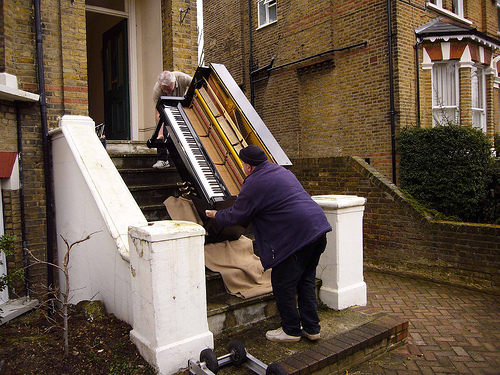
The Upright model presents its own particular challenges because of a top-heavy structure, which has the bulk of its weight residing within the cast iron frame that is higher up.
- Caster Isolation: Standard wooden casters at the foundation of the upright piano are made for minor adjustments indoors, and not to be used for structural transportation. Moving teams lift the piano onto a sturdy, rubber-wheeled piano dolly to keep the initial casters from breaking.
- Keyboard Lid Lockdown: The keyboard’s slide is secured and is padded to keep keys from moving during transportation, thereby reducing the chance of internal damage due to alignment.
- Dual-End Spotting: Since uprights are prone to tipping in the opposite direction if they are not guided, it is imperative that transport teams maintain a constant two-man command on both sides of the frame at all times during change.
Advanced Specialized Gear Utilized for Heavy Instruments
Hand trucks do not meet the demands of instrument transportation. Professional teams use heavy-duty, specifically designed gear that is designed to minimize physical stress and shield the device from road noise.
- Heavy-Duty Piano Boards (Skid Boards): The frames are made of padded hardwood designed to accommodate the entire lateral dimensions of grand pianos to serve as a strong secondary frame during transport.
- Multi-Wheel Polyurethane Dollies: Dollies with high capacity and anti-shock wheels with no marking. They slide effortlessly over smooth wood or slate surfaces, with no trailing tracks.
- High-Tensile Ratchet Tie-Downs: The cargo straps are specifically designed to withstand thousands of pounds of force and are used to secure this instrument securely to the wall of the vehicle that is being transported.
- Heavy-Duty All-Weather Ramps: Load ramps with a low profile and extended length, which reduce the slope angle of transporting heavy items from the ground to the transportation bed.
Financial Protection: Vetting Insurance and Cargo Valuation Limits
Knowing the difference between insurance and transit liability coverage is essential in selecting a piano removal service in my area. The typical household moving contract will deal with instruments that are specialized under generalized coverage based on weight, and does not provide adequate protection to the most valuable musical items.
The Limits of Standard Released Value Protection
State and federal moving regulations typically default to release Value Protection, which typically pays only 60 cents for each pound in the event of damage. Based on this standard, the grand piano that is valued at $40k would be eligible for coverage of just $480 in the event of its destruction during transportation. This gap is so large that it’s imperative for the property owner to look for the most comprehensive options for cargo before making a decision to sign a contract for transport.
Securing Verifiable Full Value Protection
When you’re moving instruments that are expensive, such as Steinway, Yamaha, or Baldwin models, ensure that the moving company you choose to use provides the Full Value Protection in writing on the official bill of the bill of. The contractual amendment obligates the transporter to take care of the market value of the instrument or all costs of repairs for the instrument, should any transportation difficulties arise. In the case of rare or old concert grand pianos, homeowners must consider adding an individual property rider on their current insurance plan, which will provide complete assurance of financial security.
Post-Transit Protocol: Acclimatization and Precision Tuning
The attention to the acoustic instrument doesn’t stop once the transportation crew has it set up in the new place. Pianos need a planned time of rest in order for adjustment to the distinct indoor air circulation, as well as the relative humidity and temperatures that they will find in their new location.
Giving Tone Woods Room to Settle
After your instrument has been situated in your house or in your studio, do not make an appointment for the piano tuner. The wood on the soundboard requires time to adapt to the moisture levels of the baseline in the space. It is suggested to leave the instrument in a quiet place for up to six weeks following the removal. This allows internal wood grain to settle so that after the instrument is tuned, it can maintain the pitch for a long time. duration of time.
Finding the Ideal Indoor Location
- Avoid Direct Exterior Walls: Placing a piano on the wall that is not well insulated exposes it to extreme temperatures that can cause rapid tuning instability.
- Stay Clear of HVAC Vents: Do not place the device close to forced-air heaters and air conditioners. Also, avoid placing it in the path of fire hoods or return vents.
- Shield from Natural Sunlight: The direct sunlight could easily damage the fine lacquer finish on wood and cause warping of the soundboard. Therefore, make sure you choose a place that is shielded by large windows.
Why Expert Handling Outperforms DIY Moving Options
Selecting a professional who is certified by DC Movers will eliminate the risk of property damage, physical injury, and expensive instrument repairs, which are common during DIY moving efforts.
Complete Liability and Property Protection
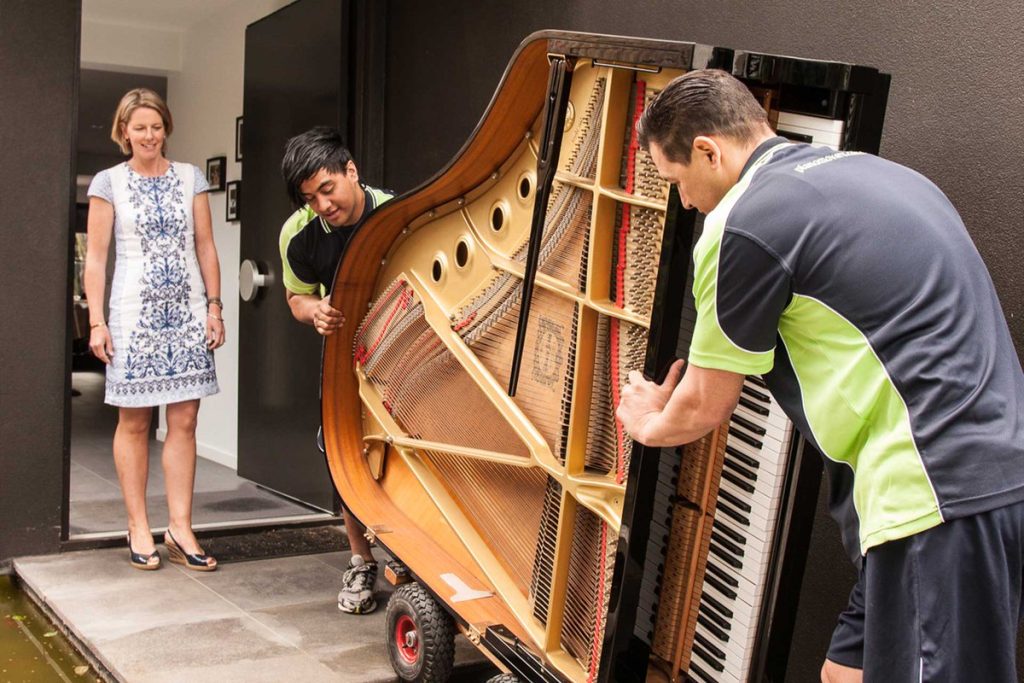
- Wall and Doorway Shielding: Professionally trained staff use high-quality doorjamb guards as well as Neoprene floor runners to protect your structure from bumps and scratches that can happen accidentally.
- Workers’ Compensation Shielding: Moving a weighty object that weighs 800 pounds carries the risk of physical injury. The certified moving team is backed by a robust Workers’ Compensation insurance, making sure homeowners are free of personal financial liabilities for accidents.
- Precision Weight Allocation: Expertly trained movers know how to transfer massive weights through stairs with modern mechanical benefits instead of the use of physical strength.
Comprehensive Transport Solutions from Start to Finish
From the very first blueprinting of your hall clearances, to the secure installation of your instrument in the modern air-ride suspension fleet, expertly handled handling is guaranteed to be safe. Your instrument will be completely safe from road hazards and will arrive at the destination in perfect quality and structurally sound, able to fill the space with stunning music for years to come.
Conclusion
Moving an acoustic instrument across Washington requires a deep understanding of mechanical leverage spatial dynamics, as well as special transport equipment. As these sophisticated instruments have thousands of perfectly well-balanced internal components under huge structural strain, common moving methods are not sufficient to protect them. Working with an expert team such as DC Movers eliminates the physical dangers of lifting heavy objects, as well as safeguards your musical instrument from damage that is costly and stress from the environment. Through combining loading with white gloves along with the proper post-move settling window, you can ensure that your instrument’s beauty and performance remain in the years to follow.